

Ryan Coogler’s stunning Black Panther is masterful for a variety of reasons. A film of contrasts that juxtaposes technology and traditionalism, Coogler presents a Wakanda that is at war with history and in turn at war with itself. Unlike the rest of Africa, Wakanda has not suffered under the constant rape and pillage of colonization and the brutality of slavery. As a result, the country and its people – Wakandan women in particular — have been able to thrive and advance, their history and traditions intact.
It is these Black women, the Dora Milaje and its general Okoye (Danai Gurira), the Queen Mother Ramonda (Angela Bassett), Princess Shuri (Letitia Wright) and finally Nakia, (Lupita Nyong'o), T’Challa’s ex-lover, who stand at the center of the film. Nakia and these other powerful women are heartbeats of Wakanda and King T’Challa’s (Chadwick Boseman) backbone – literally. In fact, Black Panther side eyes the hell out of the absurd and tiresome trope of the “Strong Black Woman.” Instead, these women stand fully in their humanity untouched by sexism and misogyny.
With various aims and objectives throughout the film, the women of Wakanda have missions and goals which at times grate and grind against one another. Nakia's trajectory is perhaps one of the most intriguing. Standing at a crossroads between traditionalism and modernity, Nakia has chosen her passions and her desire to help the world over her love for the king. A War Dog (member of the Wakandan CIA) – T’Challa’s love though welcome, has failed to keep her tethered to him or to her homeland. In fact, when he interrupts Nakia’s mission against the Boko Haram in Nigeria, she is infuriated, only calming down when she discovers that T’Chaka has been murdered and that T’Challa will ascend to the throne.
It’s rare to see so many natural, dark skin Black women on screen, and Wakandan men's reverence to them is apparent. Coogler wields his lens towards the women of Black Panther but refuses to harp on their sensuality. Instead, he makes their drive and intentions crystal clear. Nakia’s actions, for example, are born out of instinct, honor and love. Both fierce and feminine, she isn’t forced to choose one aspect of herself over another. Her beauty is arresting, but it doesn't define her.
Continue reading at Shadow and Act.
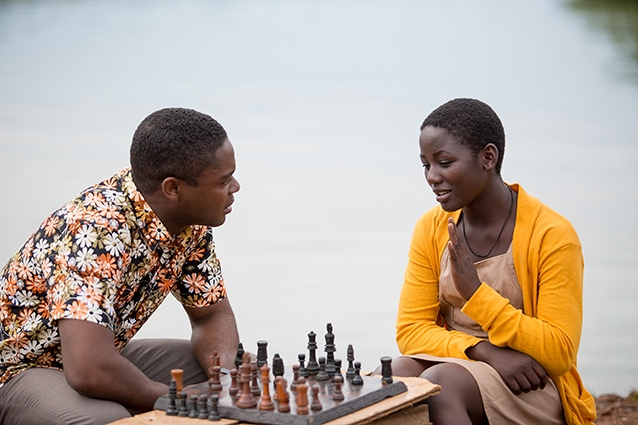 Some of the most ignored stories in the film industry are those of women and girls of the African Diaspora. Though we go through cycles where Hollywood pushes out a plethora of stories about people of color for a set amount of time, films like “Eve’s Bayou”, “Pariah”, and “Beasts of the Southern Wild” are far and few in between. This year, Disney has sought to go against the grain to bring to us the story of 20-year-old Ugandan master chess player, Phiona Mutesi, in Mira Nair’s “Queen of Katwe”. A rarity for a mainstream Hollywood film, “Queen of Katwe” has an all-Black cast and (most importantly) not a white savior in sight.